

Behind the Etching: Falling Leaves
Nov 14, 2026
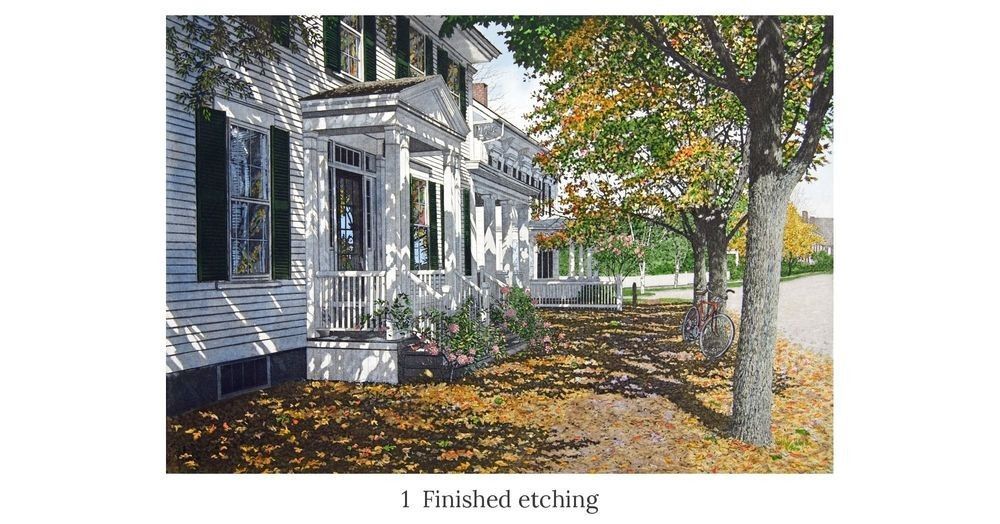
In this Behind the Etching post, I share what happened when I changed my plan partway through Falling Leaves.
The Inspiration
My inspiration for this etching was the patterns of sunlight and shadows that fell across the facades of a row of beautiful homes in Woodstock, Vermont.
The Line Etching
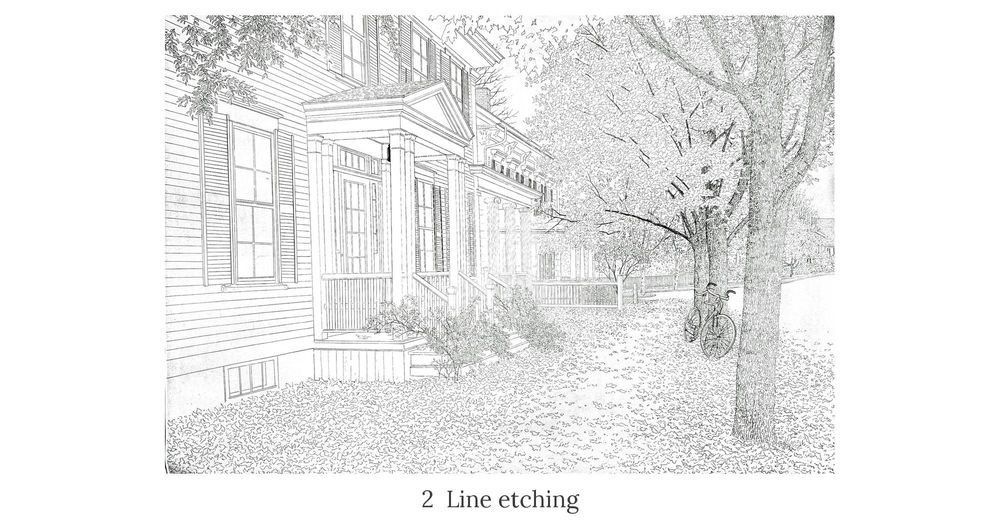
I made a line etching of the houses, trees, and the bicycle on a polished copper plate.
The Aquatint Guide
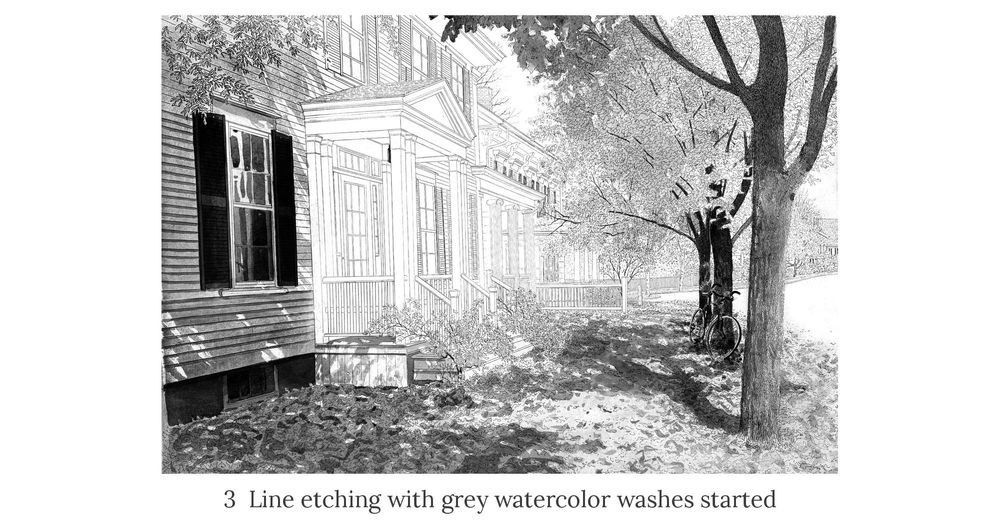
A print was taken, and I began shading areas of tone with grey watercolor washes on the print. This was meant to be my aquatint guide for this etching, to help me decide how long to etch each area when I used the aquatint technique. (I explain the aquatint technique in my Pemaquid Light post.)
It was going well, but I stopped working on the aquatint guide. I'm sure that because it was a large etching, I was feeling impatient, and I thought it would be tedious to paint the intricate details of light and shade on the porches and pillars on the paper print — and then do it again on the copper plate.
Changing the Plan
So I stopped what I had been doing and prepared the plate with rosin to go directly to the aquatint process. I masked out areas to remain untouched by the acid and used a series of photos I had for the drawing as I continued masking out and etching through many immersions in the acid.
The First Print
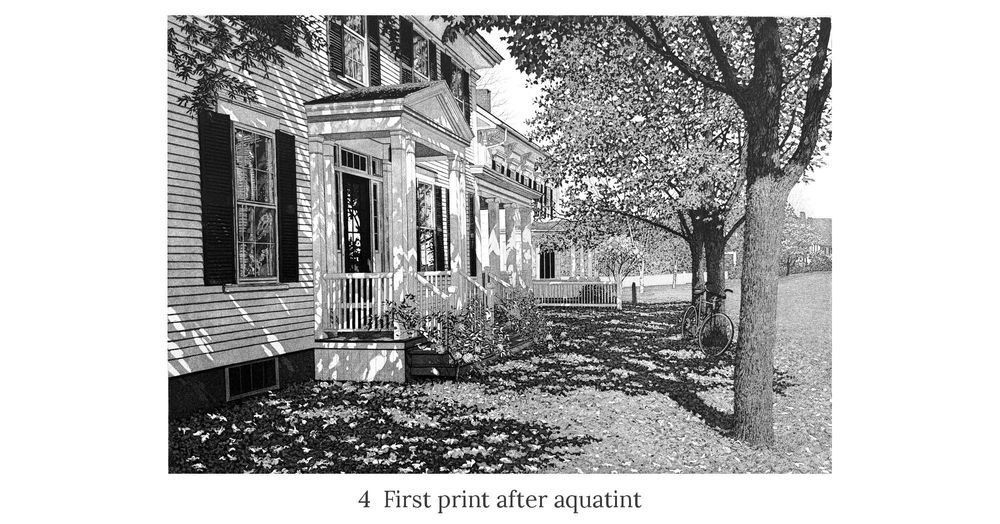
When the aquatint process was complete, I was curious to see the result. Not bad. Places needed burnishing, but that can happen even when I've worked with a complete aquatint guide. It was an interesting experiment, which I've never repeated.
More Behind the Etching posts: In the Mist · Pemaquid Light · August
See Falling Leaves · See photos of each step in my Techniques Gallery